
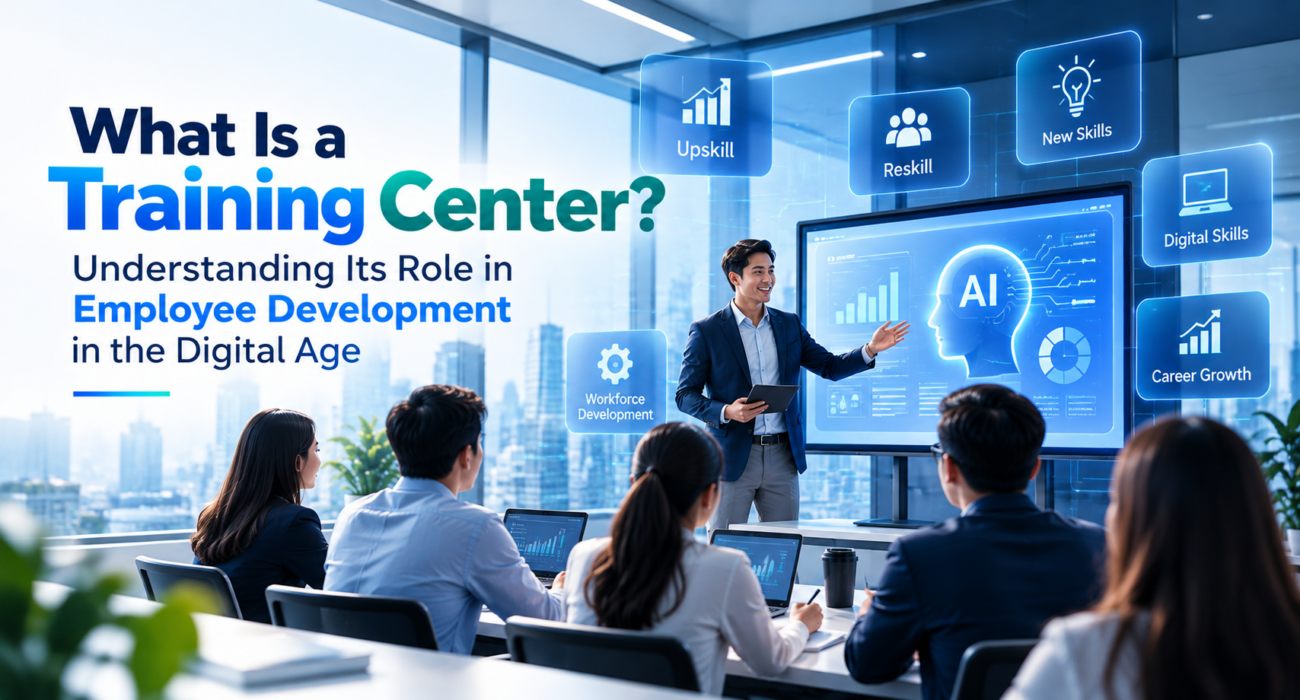
In today’s rapidly evolving business environment, technology continues to transform how organizations operate, compete, and deliver value to their customers. As digital transformation accelerates, employees need to continuously develop their skills and adapt to new technologies, processes, and business requirements.
One effective way for organizations to support this ongoing development is through a Training Center. By providing structured learning programs, practical training, and opportunities for professional growth, a training center helps employees build the knowledge and skills they need to succeed in the digital age.
But what exactly is a training center, and why is it becoming increasingly important for modern organizations?
What Is a Training Center?
A Training Center is a dedicated facility, department, or organizational unit that provides structured training and learning programs to develop employees’ knowledge, skills, and professional capabilities.
Training centers can operate within an organization or as independent institutions that deliver training services to individuals, businesses, and other organizations. Depending on their objectives, they may focus on technical skills, leadership development, operational procedures, digital technologies, or industry-specific expertise.
A training center can provide learning through various formats, including:
Classroom Training: Instructor-led sessions that allow participants to learn concepts, discuss ideas, and interact with trainers.
Practical Workshops: Hands-on activities that help employees apply their knowledge to real-world situations.
Technical Training: Specialized programs covering software development, IT systems, cybersecurity, data analytics, and other technical subjects.
Online Learning: Digital courses and virtual training sessions that allow employees to learn remotely.
On-the-Job Training: Practical learning opportunities designed to help employees develop skills while performing their daily responsibilities.
The main objective of a training center is to ensure that employees have the competencies required to perform their jobs effectively while preparing them for future responsibilities and technological changes.
Why Is a Training Center Important for Organizations?
Investing in employee development is no longer optional for organizations that want to remain competitive. A well-designed training center can support business growth by improving workforce capabilities, strengthening internal processes, and preparing employees for changing business demands.
1. Improving Employee Skills and Competencies
Employees need the right skills to perform their responsibilities efficiently. However, existing knowledge and experience may not always be sufficient when job requirements change or new technologies are introduced.
A training center provides structured learning opportunities that help employees strengthen their existing capabilities and acquire new skills.
For example, employees may receive training in project management, communication, data analysis, software applications, or industry-specific processes.
By continuously developing employee competencies, organizations can improve work quality, reduce avoidable errors, and support more consistent performance.
2. Supporting Digital Transformation
Digital transformation involves more than implementing new technologies. Employees must also understand how to use these technologies effectively and incorporate them into their daily workflows.
A training center helps organizations prepare their workforce for digital transformation by providing relevant training in areas such as:
Artificial Intelligence (AI) and automation
Data analytics and business intelligence
Cloud computing and digital platforms
Cybersecurity and data protection
Software applications and digital workflows
For example, when a company introduces a new enterprise system, employees may need training to understand its functions, follow the correct procedures, and use the system efficiently.
Without adequate training, technology investments may not deliver their full potential. A training center helps bridge the gap between technology adoption and employee readiness.
3. Increasing Productivity and Operational Efficiency
Employees who understand their responsibilities, tools, and work processes are better equipped to complete tasks accurately and efficiently.
Training programs can help employees reduce unnecessary steps, follow standardized procedures, and solve problems more effectively.
For instance, training employees to use business software correctly may reduce manual work, minimize data entry errors, and improve coordination between departments.
Over time, these improvements can contribute to higher productivity, better service quality, and more efficient use of organizational resources.
4. Developing Future Leaders and Specialized Talent
Organizations need employees who can take on greater responsibilities as business needs evolve.
A training center can support career development through leadership programs, technical specialization, management training, and professional development pathways.
These programs help employees prepare for promotions, manage teams, lead projects, and develop expertise in critical business functions.
Developing internal talent can also help organizations reduce reliance on external recruitment for certain roles and maintain valuable institutional knowledge.
5. Encouraging Continuous Learning
In the digital age, skills can become outdated as technologies, customer expectations, and industry standards change.
A training center encourages a culture of continuous learning by making employee development a regular part of organizational operations rather than a one-time activity.
Organizations can establish ongoing learning programs, knowledge-sharing sessions, technical workshops, and skill development plans to ensure employees continue growing alongside the business.
This approach helps create a more adaptable workforce that can respond to new challenges and opportunities.
What Are the Main Types of Training Centers?
Training centers can be categorized according to their objectives, target audiences, and areas of specialization.
1. Corporate Training Center
A corporate training center focuses on developing employees within an organization. Its programs are designed to support business objectives, improve work performance, and prepare employees for new responsibilities.
Typical training topics include leadership, communication, customer service, compliance, teamwork, and organizational processes.
2. IT and Technology Training Center
An IT and technology training center focuses on technical knowledge and digital competencies.
Common training areas include software development, programming, database management, cloud infrastructure, cybersecurity, AI, and IT system administration.
These programs are particularly valuable for organizations that depend on technology to support their operations or deliver digital products and services.
3. Professional and Vocational Training Center
Professional and vocational training centers provide practical skills and specialized knowledge for specific occupations or industries.
Training may cover technical operations, equipment handling, accounting, finance, administration, customer service, or other job-related competencies.
These centers help individuals prepare for employment and enable existing employees to improve their professional capabilities.
4. Internal Training Center
An internal training center is established and managed within an organization to support its own employees.
It allows the organization to design training programs that reflect internal policies, operating procedures, technology platforms, and business requirements.
An internal training center can also help standardize knowledge across departments and ensure employees receive consistent information.
Training Center vs. Traditional Employee Training: What Is the Difference?
Although both approaches aim to develop employee capabilities, a training center typically provides a more structured and continuous learning environment.
| Aspect | Traditional Employee Training | Training Center |
|---|---|---|
| Learning approach | Often focused on specific training sessions | Structured learning programs and development pathways |
| Main objective | Address immediate skill requirements | Support ongoing skill development and organizational goals |
| Training resources | May vary by department or activity | Can provide centralized learning resources and expertise |
| Progress tracking | May focus on attendance or session completion | Can incorporate competency assessments and development tracking |
| Long-term focus | Often addresses immediate needs | Can support continuous learning and career development |
The exact differences depend on how an organization designs and manages its training activities. A training center does not necessarily replace traditional training; instead, it can bring different learning activities together within a more coordinated framework.
The Role of Training Centers in the Digital Age
As businesses adopt more advanced technologies, training centers are evolving beyond traditional classrooms. Modern training programs increasingly combine digital platforms, practical exercises, and performance measurement.
Several trends are shaping the future of training centers.
AI-Powered Learning
Artificial Intelligence can help organizations personalize learning experiences, recommend relevant courses, and identify potential skill gaps.
AI-enabled learning platforms may also help employees access information more quickly and practice new skills through interactive exercises.
Digital Learning Platforms
Learning Management Systems (LMS) and online learning platforms allow organizations to distribute training materials, manage courses, track participation, and assess learning progress.
These platforms make it easier to deliver training across multiple departments, locations, or remote teams.
Skills-Based Development
Instead of focusing only on job titles or years of experience, organizations are increasingly recognizing the importance of specific competencies.
A skills-based approach helps identify what employees can do today, what skills they need to develop, and which learning opportunities can help close those gaps.
Data-Driven Training Evaluation
Digital tools enable organizations to evaluate training programs through measurable indicators, such as assessment results, course completion, competency improvements, and relevant job performance metrics.
This information can help organizations improve training content and allocate learning resources more effectively.
How to Establish an Effective Training Center
Building an effective training center requires more than preparing training materials or arranging classrooms. Organizations should establish a clear framework that connects learning activities with business objectives.
Step 1: Identify Training Needs
Start by assessing the organization’s current capabilities, business challenges, and future workforce requirements.
Gather information from managers, employees, performance reviews, and strategic plans to identify the most important skill gaps.
Step 2: Define Clear Learning Objectives
Each training program should have specific learning objectives that explain what participants are expected to know or do after completing the program.
For example, a software training program may aim to enable employees to complete essential tasks independently or follow standardized system procedures.
Step 3: Develop Relevant Training Programs
Create training content that reflects actual job responsibilities and organizational requirements.
Combine theoretical knowledge with practical exercises, case studies, demonstrations, and real-world scenarios to improve learning effectiveness.
Step 4: Select Appropriate Training Methods
Choose training formats that suit the subject matter, employees’ learning needs, available resources, and operational constraints.
Organizations may combine classroom sessions, online courses, workshops, mentoring, and on-the-job learning.
Step 5: Measure Training Effectiveness
Evaluate whether the training program achieves its intended outcomes.
Useful indicators may include:
Training completion rates
Assessment and certification results
Improvement in demonstrated competencies
Employee feedback
Changes in relevant work performance indicators
Training effectiveness should be assessed in relation to the program’s objectives rather than relying solely on attendance or participant satisfaction.
Step 6: Continuously Improve the Programs
Review training results regularly and update content as technologies, processes, and business requirements change.
Continuous improvement helps ensure that the training center remains relevant and continues to provide value to both employees and the organization.
What Are the Benefits of a Training Center for Businesses?
A well-managed training center can deliver benefits at both the employee and organizational levels.
For employees:
Opportunities to develop new skills and professional knowledge
Greater confidence in using tools and technologies
Better preparation for career advancement
Improved ability to adapt to changing job requirements
For organizations:
A more capable and adaptable workforce
More consistent work processes and service quality
Better readiness for digital transformation
Improved internal knowledge sharing
Stronger support for talent development and succession planning
However, these benefits are not automatic. They depend on the relevance of training content, employee participation, management support, and the organization’s ability to apply learning in the workplace.
Organizations should therefore view training as a long-term investment in workforce capabilities rather than simply an expense associated with conducting courses.
Conclusion
A Training Center plays an important role in helping organizations develop employee capabilities, improve operational efficiency, and prepare their workforce for the digital age.
By providing structured learning programs, practical training, and continuous development opportunities, a training center can help employees keep pace with technological change while supporting the organization’s long-term business objectives.
As digital transformation continues to reshape the workplace, organizations that invest in systematic employee development will be better positioned to build a skilled, adaptable, and future-ready workforce.
For businesses looking to strengthen their workforce capabilities, establishing an effective training center is an important step toward sustainable growth and long-term competitiveness.